


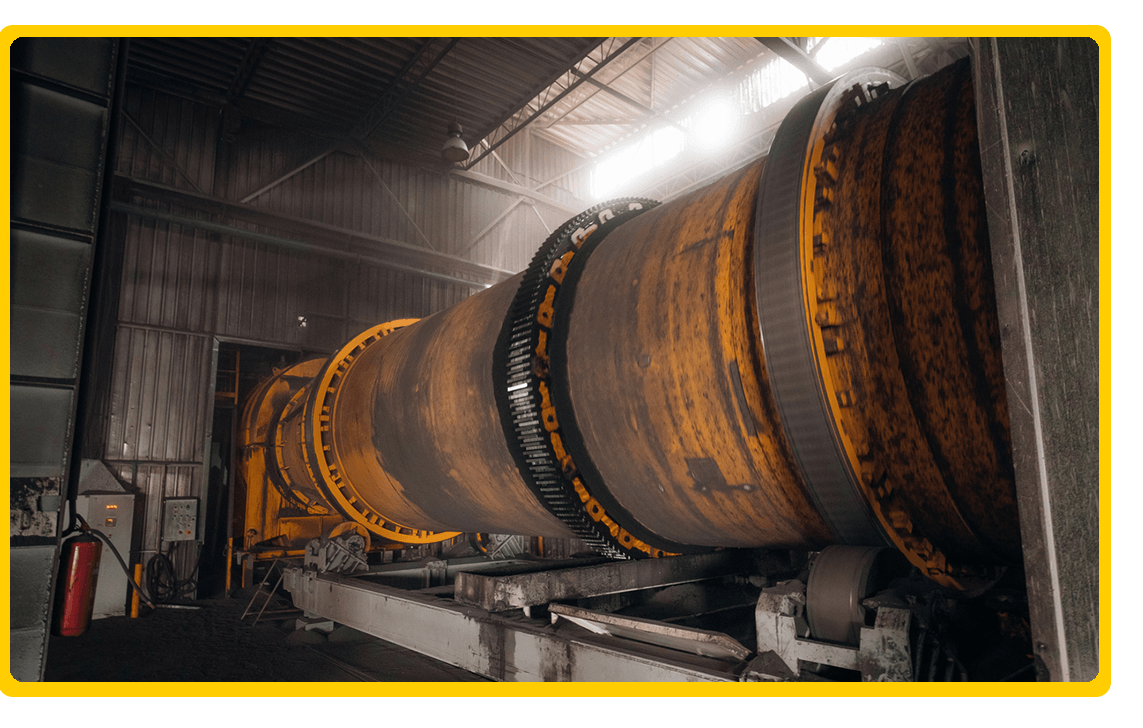
The kiln is the workhorse of the production process: continuously turning, heating and processing material. Behind that continuous operation is a refractory lining designed to withstand demanding conditions. And behind the lining is an anchoring system that helps keep it securely in place.
The kiln conditions dictate the repair strategy. The below diagram illustrates one possible sequence of refractory lining failure. Refractory anchor failure can lead to lining loss, shell overheating and unplanned downtime.
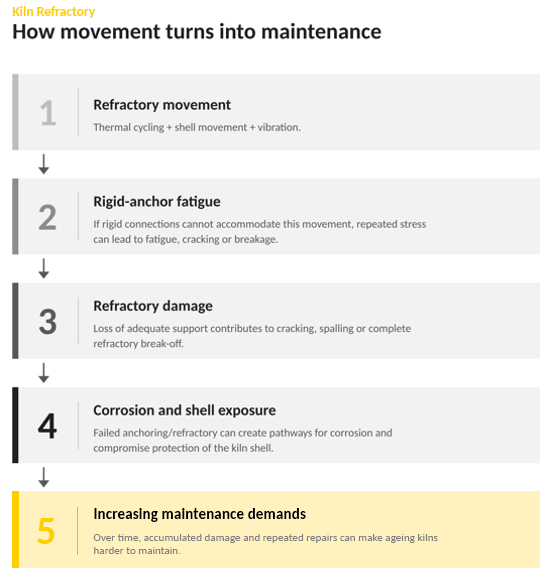
*Please note that the diagram illustrates one possible failure pathway; these issues may also occur independently or in a different order.
Regardless of your kiln’s current condition, the right refractory anchor system can help accommodate its movement.
If movement drives the failure chain, simply increasing anchor strength does not address the complete problem.
The anchoring concept must support the refractory while allowing the system to respond to thermal and mechanical movement. That is the principle behind movable anchoring systems for dynamic refractory linings.
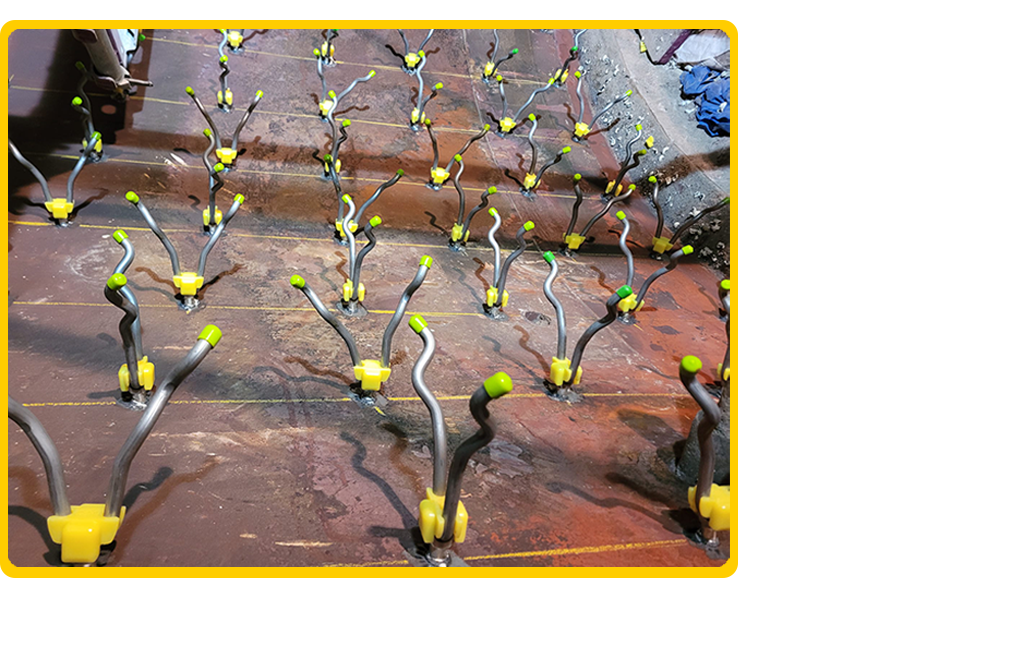 The SpeedBolt® System combines a welded stud, a replaceable Bullhorn anchor and a plastic clip. The Bullhorn passes through the eye of the stud, and the clip holds it in position during installation. At operating temperature, the clip melts, allowing the Bullhorn to move within the eye while the stud remains welded to the shell. This floating connection allows the anchor to move with the refractory, helping reduce stresses rather than rigidly restraining that movement.
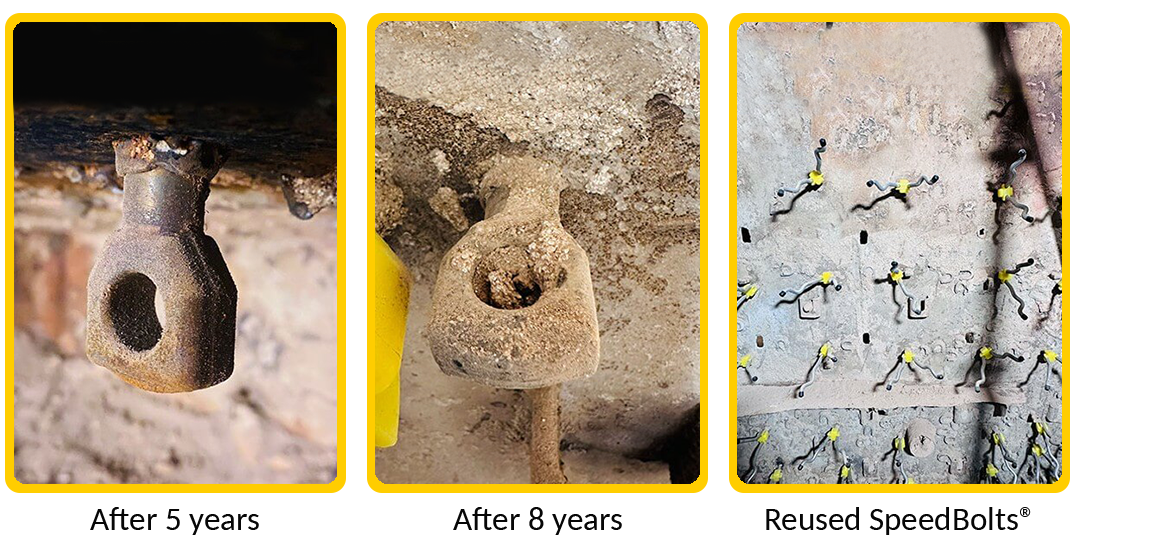
The separate components also support maintenance: a worn Bullhorn can be replaced without removing the welded stud, provided the stud remains suitable for reuse. This replacement benefit is distinct from the system’s movement mechanism, which depends on the Bullhorn’s freedom to move within the stud eye after the clip melts.
Before specifying the SpeedBolt® System, identify the failure mechanism
and assess the condition of the lining and shell.
Key considerations include:
the operating temperature and temperature variation;
movement, vibration and mechanical loading;
refractory type and lining thickness;
shell condition and previous repairs;
anchor alloy and spacing.
See SpeedBolt® in practice: a UK cement plant has been installing the system since 2014.
Explore the project scope to see how it has been applied at the plant.
Contact us to discuss your application.


