


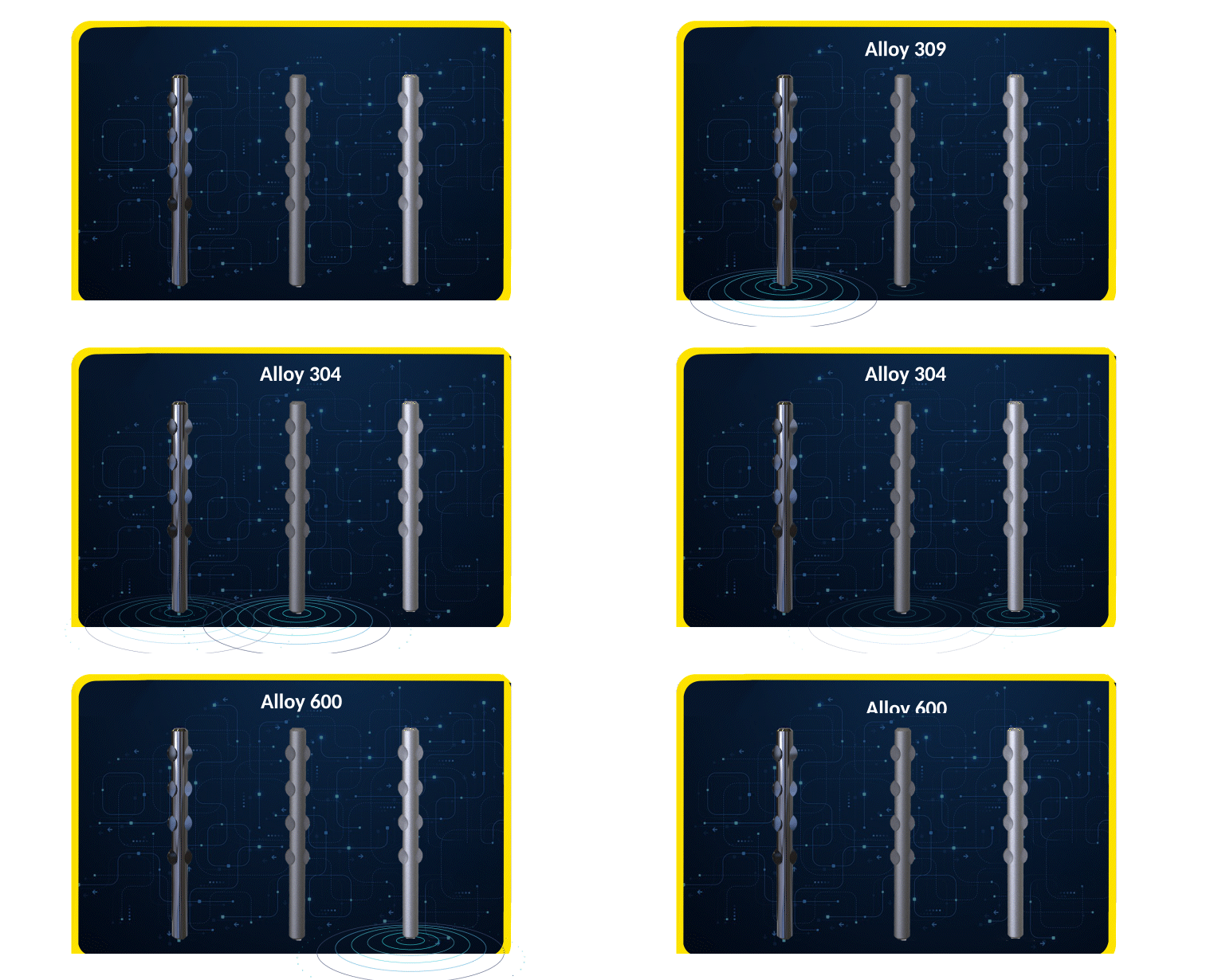
When buyers compare alloys for the first time, price is often the most visible differentiator. Selecting a low‑cost alloy may appear financially responsible at the quotation stage, until operating reality sets in.
A cheaper alloy can look attractive on paper, yet perform poorly once exposed to service conditions inside furnaces, kilns, incinerators, reactors, or cyclones. This gap between purchase price and in‑service performance is where many failures begin. Most budget alloys struggle with:
Thermal shock.
Creep at elevated temperatures.
Corrosion caused by unexpected process conditions.
Grain growth during repeated heating cycles, leading to reduced load‑bearing capacity.
Although counterintuitive, but higher‑grade alloys often provide better long‑term economy. More robust alloys can reduce the required cross‑section to manage stress, improve resistance to thermal cycling, and limit corrosion losses over time. The result is extended service life and fewer unplanned shutdowns, often producing savings that far exceed the initial price difference.
In practice, the “cheapest” alloy often proves to be the most expensive once labour, replacement frequency, emergency outages, and lost production are considered. When evaluated across the full lifecycle of a refractory system, the higher‑priced alloy is frequently the most economical choice.
Price is not cost.
Most alloy failures follow predictable patterns. The table below highlights the operating conditions that most strongly influence alloy performance and the material behaviours that help prevent premature failure.
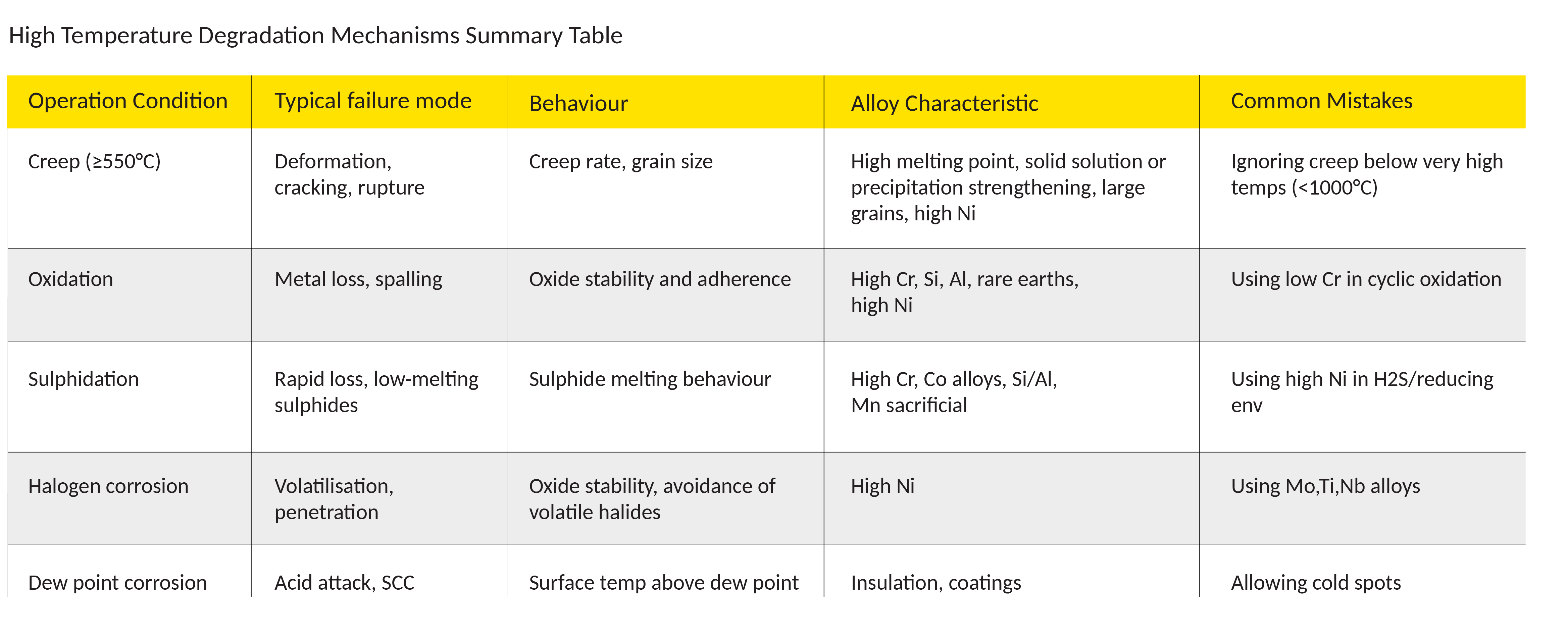
Real‑world experience shows that selecting a lower‑cost alloy in the following conditions often results in accelerated failure:
Operating temperatures above 1000 °C.
Large or frequent thermal cycles, such as in kilns, incinerators, and reformers.
Sulphur‑containing fuels or feedstocks.
Oxygen‑depleted or alternating redox atmospheres.
Heavy refractory loads requiring stable mechanical strength.
Processes where downtime carries significant financial impact.
Installations that are difficult, time‑consuming, or costly to access for repairs.
In these environments, alloy performance, not purchase price determines overall cost.
A practical alloy selection approach doesn’t require understanding of every chemical element or heat treatment curve. It requires aligning your material choice with the realities of your operating environment:
Clarity begins with identifying what is actively degrading your anchors. Heat cycles? Sulphur? Chemical attack? Carburisation? Abrasive dust? Identify the most aggressive factors in your process. Design for the worst‑case condition, not the average operating scenario.
Some alloys have decades of proven performance behind them. Materials repeatedly specified within an industry earn that position because they survive where alternatives fail. Field history often provides more reliable guidance than datasheets alone.
Material failures trigger shutdowns, anchor removal, relining activities, labour costs, and lost production. In most high‑temperature processes, downtime, not material price, is the dominant cost driver.
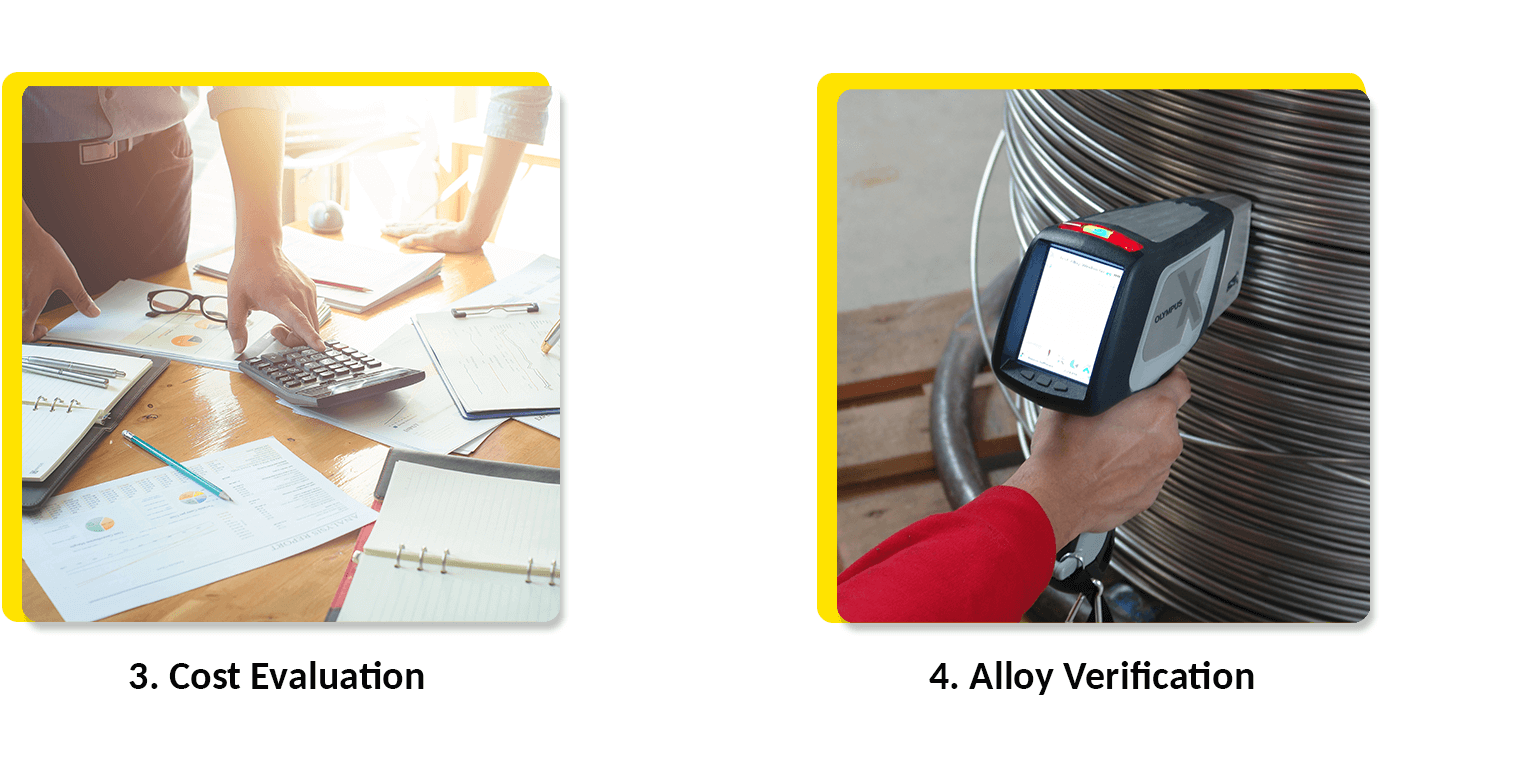
Positive Material Identification (PMI) testing and reliable material certificates confirm that the supplied alloy matches the specification. Even small compositional deviations can significantly reduce service life and negate all other selection efforts.
Choosing the right alloy is about supporting long‑term operational goals. With a disciplined selection process, equipment reliability improves, maintenance intervals extend, and overall operating costs decline.
When uncertainty remains, consult a technical specialist who can evaluate your application in detail. By combining field experience with engineering insight, such as the knowledge captured by our turnaround and engineering teams, you can confidently select an alloy designed to perform over the full life of your refractory.
Contact us to ensure your next installation is built to withstand real‑world conditions.


